- 接續
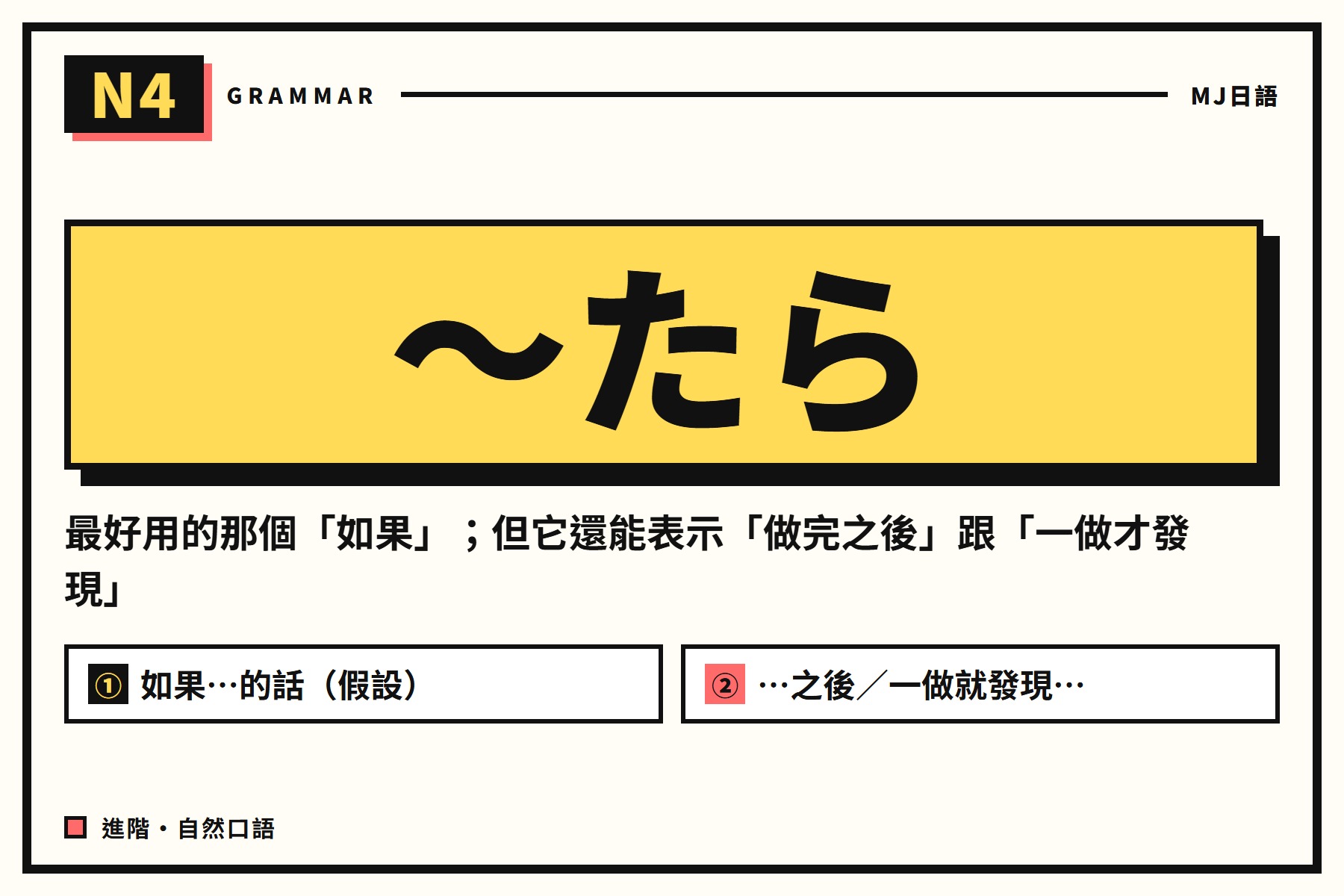
- 動詞た形 + ら(把「〜た」直接加「ら」;い形容詞「〜かったら」、名詞/な形「〜だったら」)
- 意思①
- 如果…的話(假設)雨が降ったら、行きません。如果下雨就不去。
- 意思②
- …之後/一做就發現…着いたら、止めてください。到了就請停下來。
這個字在說什麼
日文的「如果」有四個(たら・と・ば・なら),初學者最該先學會的是たら——因為它幾乎不挑場合。
另外三個都有各自的限制,たら 沒有。想不起來該用哪個的時候,用たら通常不會錯。
做法也最單純:把動詞變成「た形」,後面加一個「ら」。食べた → 食べたら、行った → 行ったら。你已經會過去式了,就等於已經會たら。
意思①:如果…的話
臨時決定要不要出門:
在藥妝店問藥師:
這是最標準的用法,跟中文的「如果…就…」幾乎可以直接對應。
想不起來該用哪個「如果」的時候,用たら通常不會錯。
意思②:做完之後/一做才發現
這個用法課本很少強調,但日本人天天在用。
01單純表示「做完某事之後」
上計程車,先把條件講清楚:
「着いたら」除了「如果到了」,更常是「到了以後」——講話的人根本沒有懷疑會不會到,只是在講順序。
判斷方法:那件事一定會發生(會到站、會下班、會天亮),就是「之後」;不一定會發生(下雨、沒好、有空),才是「如果」。
02一做,就發現了什麼(這個最少人知道)
在診所描述症狀:
這裡完全沒有「如果」的意思。它是「我做了某個動作,結果發現了原本不知道的事」。後半段一定是過去式。
這個用法一旦聽得出來,日劇跟日常會話會突然變好懂——「開けたら、誰もいなかった」(一打開,裡面沒人)、「行ったら、閉まってた」(去了才發現沒開)。
最常錯的地方
後面可以接請求、命令、邀約——這是たら最大的優勢。 「着いたら、止めてください」完全沒問題。這點特別重要,因為「と」不行:「着くと、止めてください」是錯的。你要拜託別人做什麼,就用たら。
「たら」不是過去式。 看到「た」就以為在講過去,是最常見的誤解。「明日雨が降ったら」講的是明天的事。那個「た」只是接續形式,跟時態無關。
跟哪個容易搞混
四個「如果」的分工,記這個順序就好:
たら——什麼都能接,拜託別人做事也可以。不確定用哪個就用它。
と——講「必然的結果」,像自然定律或機器操作:「右に曲がると、駅があります」(右轉就會看到車站)。後面不能接請求或命令。
ば——偏書面、偏條件本身:「安ければ買います」(便宜的話就買)。口語裡沒有たら常見。
なら——接在「對方剛講的話」後面:「日本に行くなら、京都がおすすめ」(你要去日本的話,推薦京都)。它是在回應別人,不是自己開頭。
日本人在這 2 個場合這樣用
每一則都出自 MJ日語 教過的情境。點進去有完整對話、中文翻譯跟音檔。